


5 Things to Know – 2026/10/14
Imagine studying for years, getting excellent grades, and finally applying to your dream university. You have worked hard, done everything right, and are ready to take the next step. But then you are rejected. Not because of your grades, your abilities, or anything you have done wrong. Instead, the problem lies with your grandfather, who may have owned land or held the wrong political beliefs more than 70 years ago. Sounds unfair? In North Korea, this is more than a hypothetical situation.
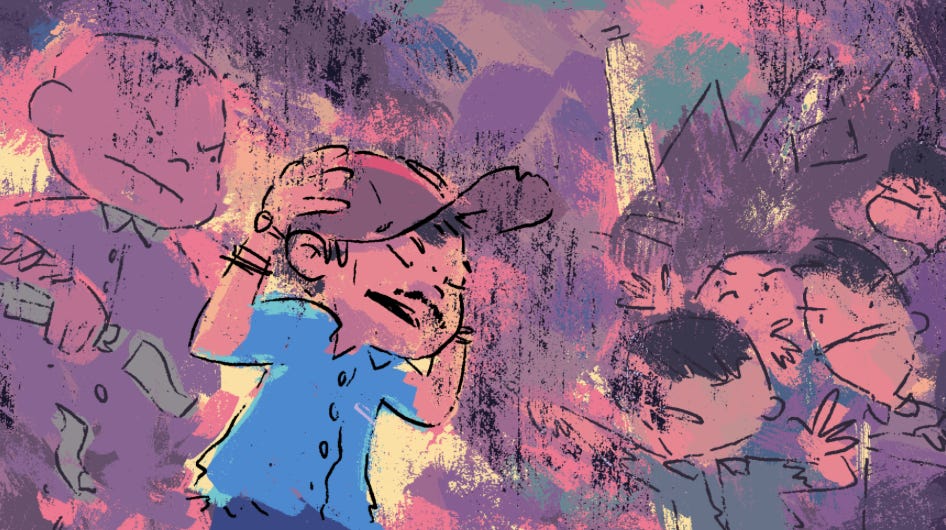
While family background influences opportunities almost everywhere, North Korea takes this to another level. A person’s ancestry and perceived political loyalty can influence where they live, what jobs they qualify for, and even which universities they can attend.
This system is known as songbun, one of North Korea’s most powerful tools of social control.
And in a country that officially promotes socialist equality, it creates a rather striking contradiction: not everyone is born equal.
A Family History You Cannot Escape
To understand Songbun, we have to go back to the early days of North Korea.
Following Korea’s division in 1945 and the establishment of North Korea in 1948, the country’s new leader, Kim Il Sung, faced an important question: who could the government trust?
The solution was to start categorising people according to their family backgrounds and perceived political loyalties. Beginning in the 1950s, this classification system gradually developed into a much more extensive political hierarchy. By the late 1960s, it had evolved into three broad classes and, according to a major 2012 study, 51 more specific categories.
The logic was simple. Families considered loyal to the revolution would be rewarded, while those viewed as politically suspicious would face restrictions.
But what exactly made someone suspicious?Having a grandfather who owned land before the communist revolution could be enough. So could having relatives associated with Japanese colonial authorities, practising certain religions, or maintaining family connections in South Korea. Meanwhile, descendants of revolutionary fighters and families closely associated with the ruling Workers’ Party generally enjoyed a more favourable position.
In other words, your family tree could become something of a political report card. Except you never took the test, and changing the results was extremely difficult.
The Three Classes: Where Would You Belong?
Traditionally, Songbun has been described as dividing North Korean society into three broad categories: the Core Class, the Wavering Class, and the Hostile Class.
The Core Class: The Trusted Elite
Imagine being born into a family with a strong revolutionary history. Perhaps your grandfather fought alongside Kim Il Sung, or your parents held important positions within the ruling party.
Congratulations, at least politically speaking, you have a head start.
Members of the core class have historically enjoyed better access to prestigious universities, desirable government positions, and housing in Pyongyang, North Korea’s capital. Of course, being in the core class does not automatically make someone wealthy or successful. But it can certainly improve their chances.
The Wavering Class: North Korea’s Question Marks
Next comes the wavering class.
These are people whose loyalty the government has traditionally considered uncertain. They might not have done anything to oppose the regime, but their families lack the revolutionary credentials needed to be considered completely trustworthy. People in this category can study, work, and participate in society, but may face restrictions when pursuing certain careers, particularly in politically sensitive institutions.
Think of it as being permanently stuck on a waiting list for opportunities that others can access more easily.
The Hostile Class: Guilty by Association
At the bottom of the traditional hierarchy are families considered politically unreliable or potentially dangerous.
Historically, this has included descendants of landowners, religious figures, and individuals accused of opposing the government.People associated with this category have faced significant barriers to higher education, prestigious employment, and residence in desirable areas.
The most troubling part? Someone does not need to have committed an offence themselves. Their family’s history can be enough.
Good Grades, Wrong Family
So, what does songbun actually mean for everyday life?
Imagine being a talented student who dreams of attending Kim Il Sung University, one of North Korea’s most prestigious institutions.
You study hard, achieve excellent results, and hope to build a successful career. But your academic performance might not be enough. Your family’s political background could limit your chances before your abilities are even fully considered. The same principle extends to employment. In North Korea, the state plays a major role in assigning jobs, and political reliability has historically influenced which positions people can obtain.
Even your address can be political.
Pyongyang is not just North Korea’s capital. It is also a privileged place to live, with generally better infrastructure, services, and access to resources than many rural areas. But moving there is not as simple as finding an apartment and packing your bags. Residence requires government permission, and political background can influence who is allowed to live there.
Songbun can therefore shape far more than someone’s career. It can influence their education, living conditions, access to resources, and opportunities for their children. And this raises another question: can you ever escape the category you were born into?
Can Money Buy a Better Future ?
For much of North Korea’s history, moving between Songbun categories was extremely difficult.
But North Korean society has changed, particularly since the devastating economic crisis and famine of the 1990s. As the state struggled to provide basic necessities, informal markets expanded, and ordinary citizens increasingly relied on trading and private economic activities to survive.
Over time, money became an increasingly important source of influence.Bribery and personal connections have sometimes allowed people to obtain better jobs, secure travel permissions, or access opportunities that might otherwise have been unavailable to them.
This creates an interesting contradiction.
A system originally designed to reward political loyalty now operates alongside an informal economy in which money can sometimes open doors. Does that mean Songbun no longer matters? Not quite.
Financial resources may help people navigate certain restrictions, but they do not necessarily erase a family’s political history. Political reliability remains particularly important for sensitive government and security positions. In today’s North Korea, both family background and financial resources can shape a person’s opportunities. Exactly how these factors interact varies, and the secrecy surrounding the system makes its current application difficult to assess.
The Inheritance Nobody Chooses
Songbun is more than an unusual class system. It raises serious questions about human rights.
Under the principle of non-discrimination, people should not be denied fundamental rights and opportunities because of their family background or political associations. Yet songbun has historically created precisely these kinds of barriers.
Its consequences can extend across generations. A parent’s political classification may affect a child’s access to education, employment, healthcare, and other essential opportunities. This makes inequality especially difficult to overcome. When children inherit disadvantages they had no role in creating, their opportunities can be restricted before they have even begun making decisions about their own lives.
Songbun also serves another purpose: political control.
When perceived disloyalty can affect not only an individual but also their children and grandchildren, the pressure to conform becomes much greater. The message is difficult to ignore. Your decisions might not only affect you. They could affect your entire family.
North Korea does not publicly acknowledge operating the discriminatory classification system described by human rights researchers, and independent access to internal records remains extremely limited. Nevertheless, testimony from North Korean escapees and investigations by international organisations have repeatedly documented its effects.
Human Rights Watch’s World Report 2026 also identifies Songbun as an ongoing source of discrimination affecting employment, housing, healthcare, and education.
A Future Written Before Birth
There is a particular irony at the heart of Songbun.
North Korea was founded on socialist ideals that emphasised equality and the elimination of class divisions. Yet the country developed a hereditary political hierarchy in which some families inherited privilege while others inherited suspicion.
Today, economic changes and informal markets have complicated that hierarchy. Money and connections can sometimes help people navigate restrictions that once appeared impossible to overcome. But the underlying problem remains.
A person’s opportunities should not depend on whether their grandparents supported the right political movement, belonged to the right social group, or had the right connections. For many North Koreans, however, family history can continue to influence the possibilities available to them.
And perhaps that is the most unsettling aspect of songbun.
In North Korea, your future may be shaped long before you are born.
You would like to support us ? Consider making a donation to help us keep this work going !